· By Ines Hartley · 1 min read
Choosing stone for a terrace
Sandstone, limestone, slate, granite or porcelain: how each one looks wet and dry, how it weathers, and what it costs to lay.
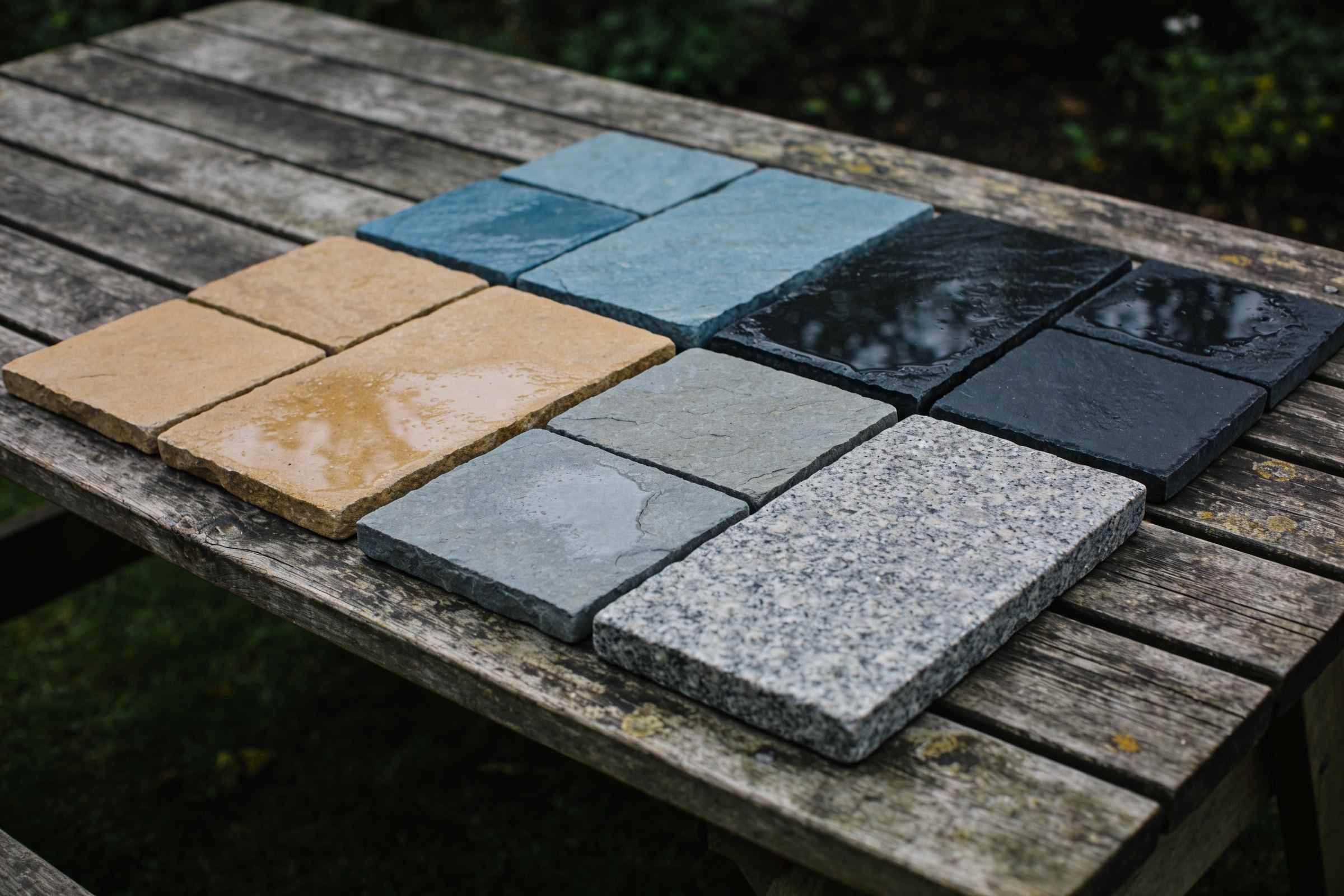
The stone you choose for a terrace is the biggest single decision in most gardens. It sets the colour of everything else, and it’ll be there for thirty years.
See it wet
Every stone changes colour when it rains, some dramatically. Buff sandstone goes honey-brown; blue limestone goes nearly black. In a British garden it’ll be wet half the year, so look at samples wet as well as dry. Our stone yard keeps a tray of each under a tap for exactly this reason.
The main choices
- Sandstone: warm, varied, forgiving; weathers well and suits old houses. Mid-price.
- Limestone: smoother and more even, cool greys and creams; elegant with modern houses. Mid to high.
- Slate: dark, crisp, dramatic; can be slippery in shade. High.
- Granite setts: hard-wearing for drives and edges, beautiful in small areas. High.
- Porcelain: the easiest to keep clean, very even; looks best in contemporary gardens. Mid.
Laying matters more
A cheap stone laid properly will outlast an expensive one laid badly. Whatever you choose, insist on a compacted sub-base and a full mortar bed.