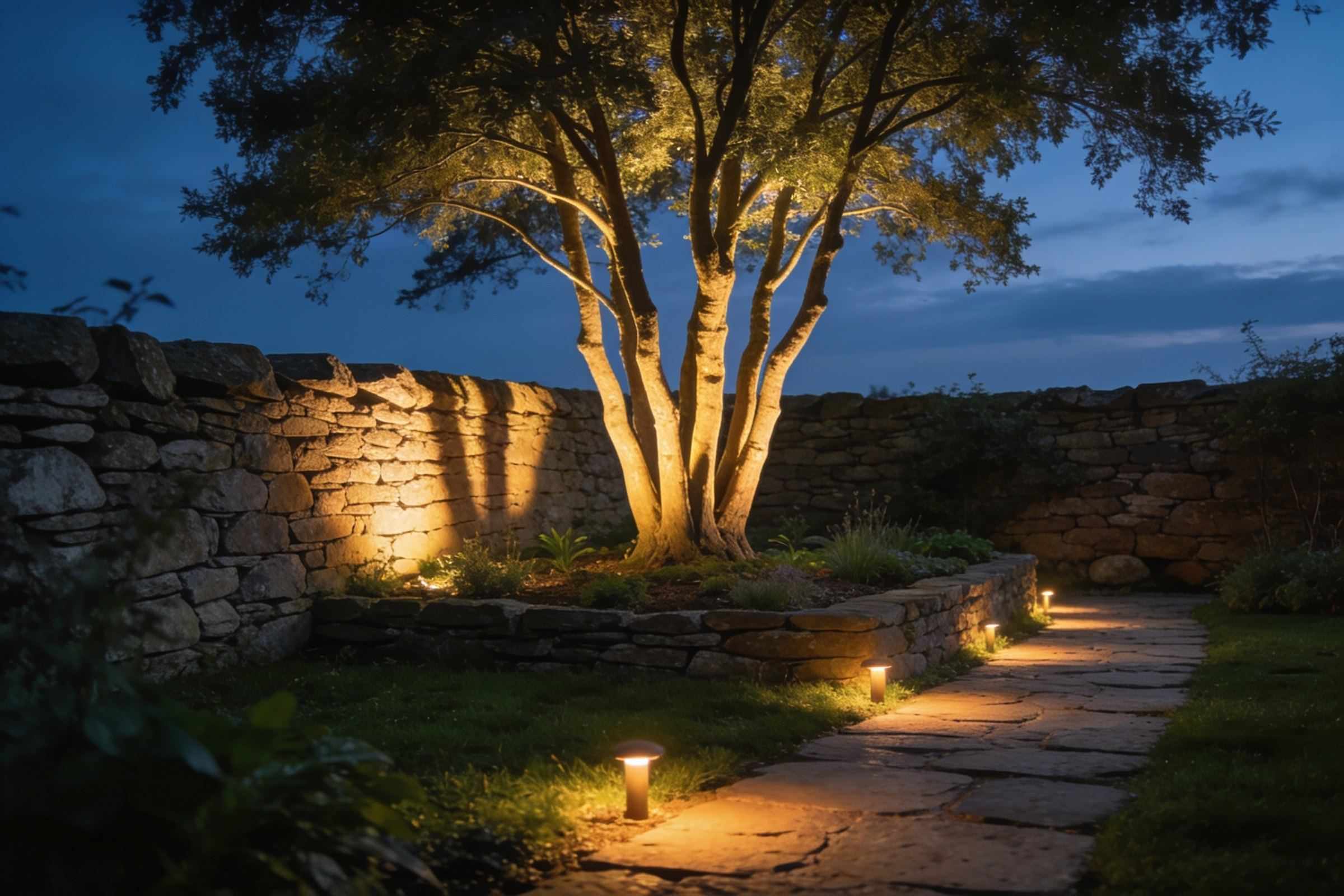
Patios and hard landscaping
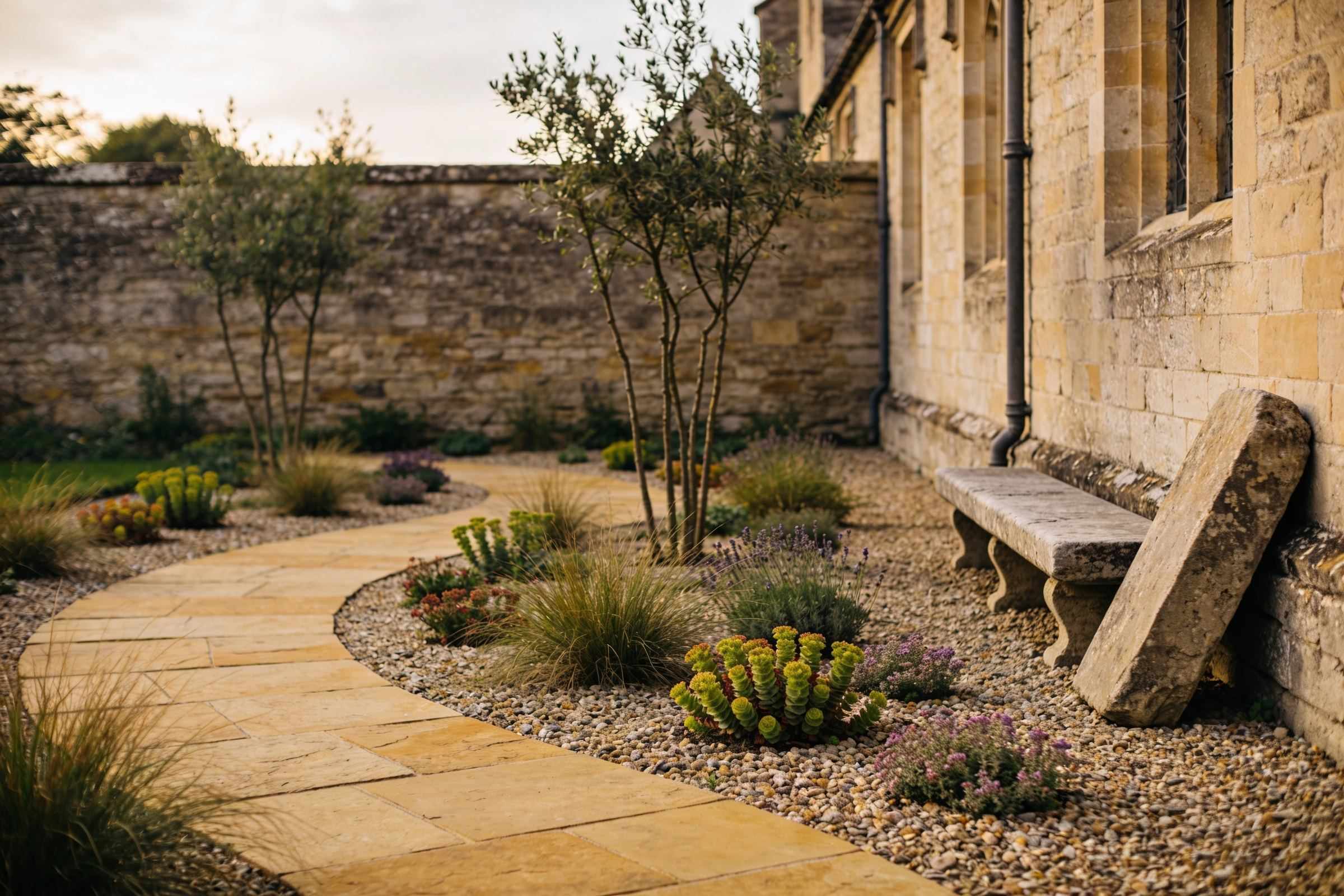
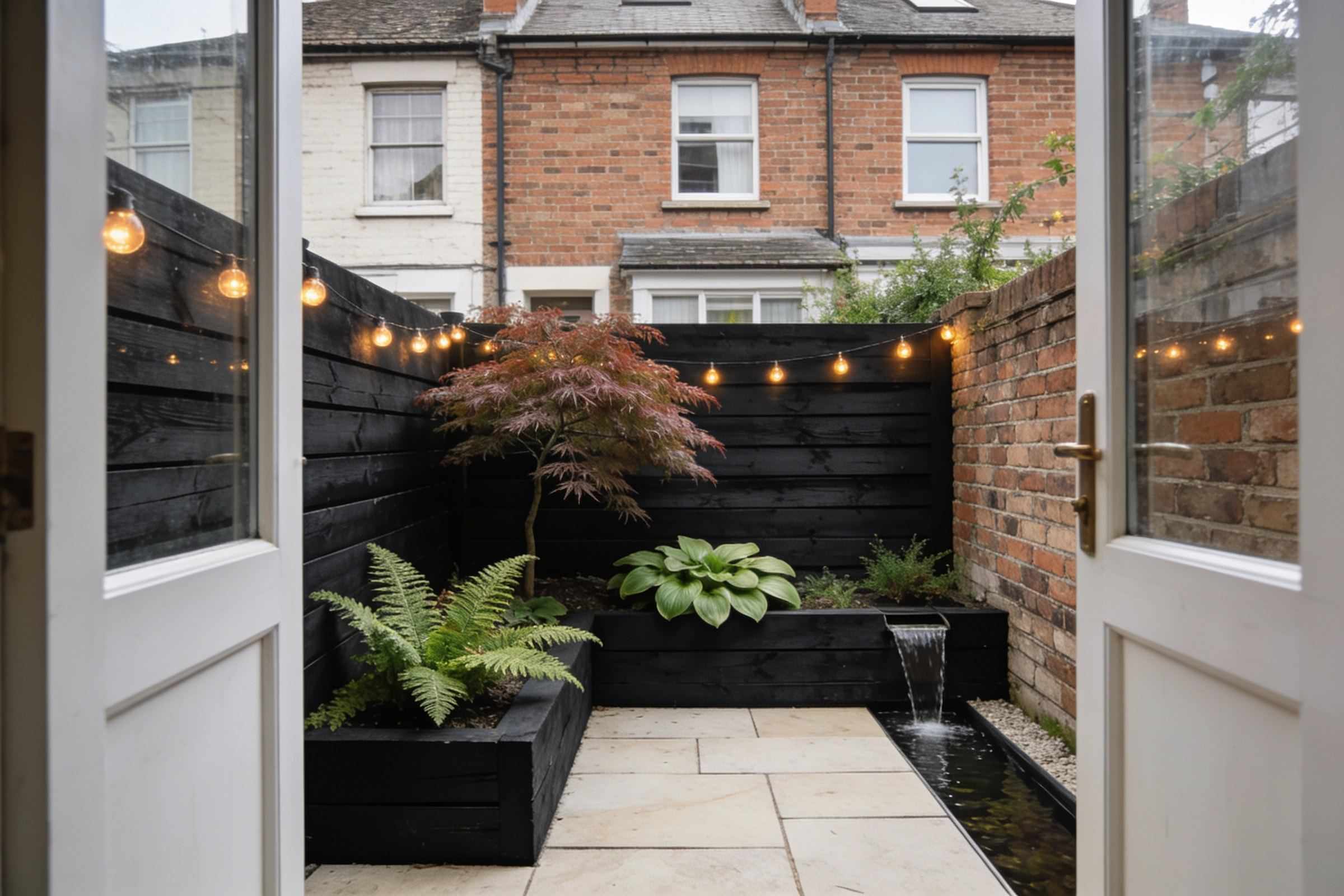
Stone terraces, steps, paths and walls, laid to last
- From
- £165 / m²
- for a laid sandstone terrace
- How long
- 2–6 weeks
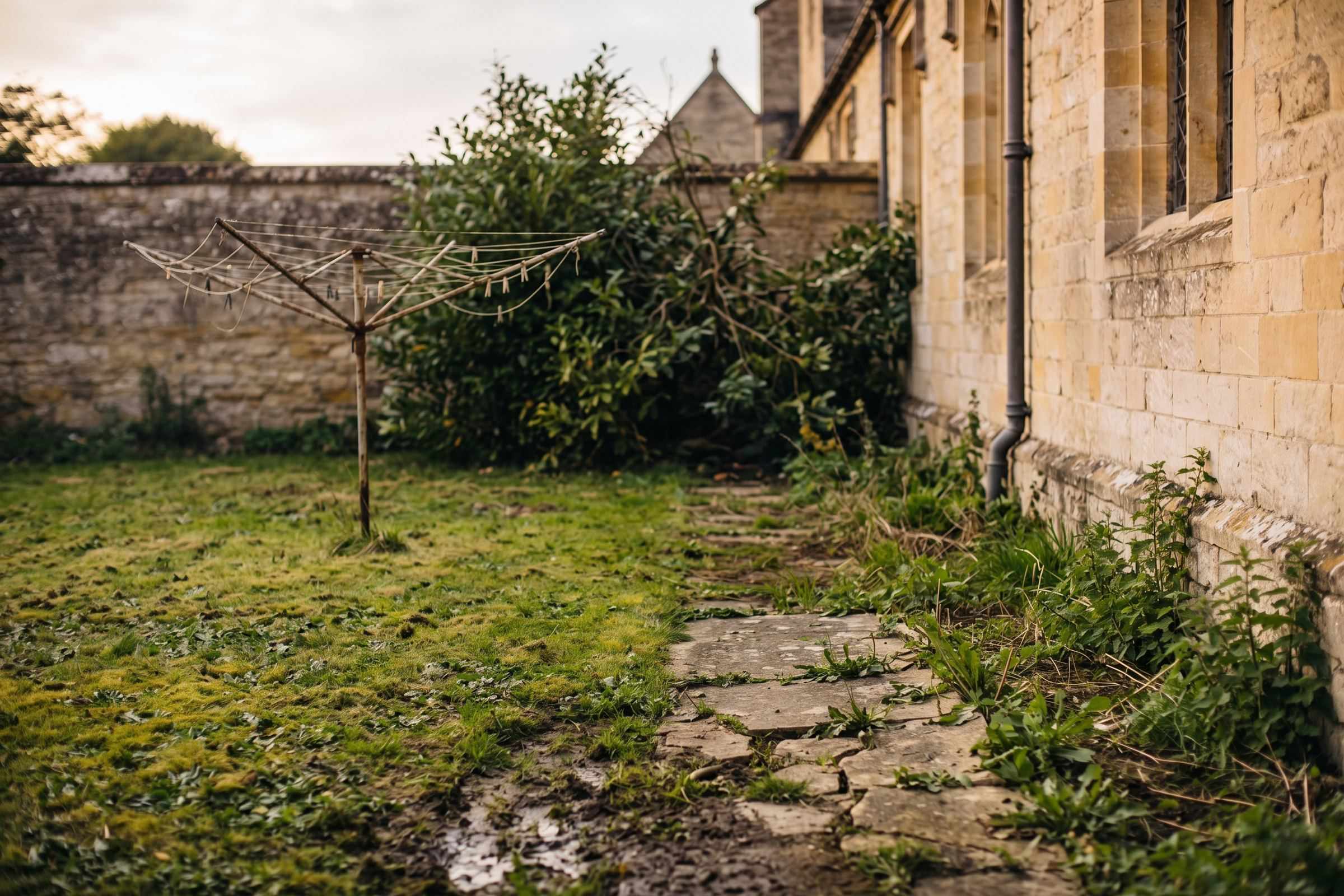
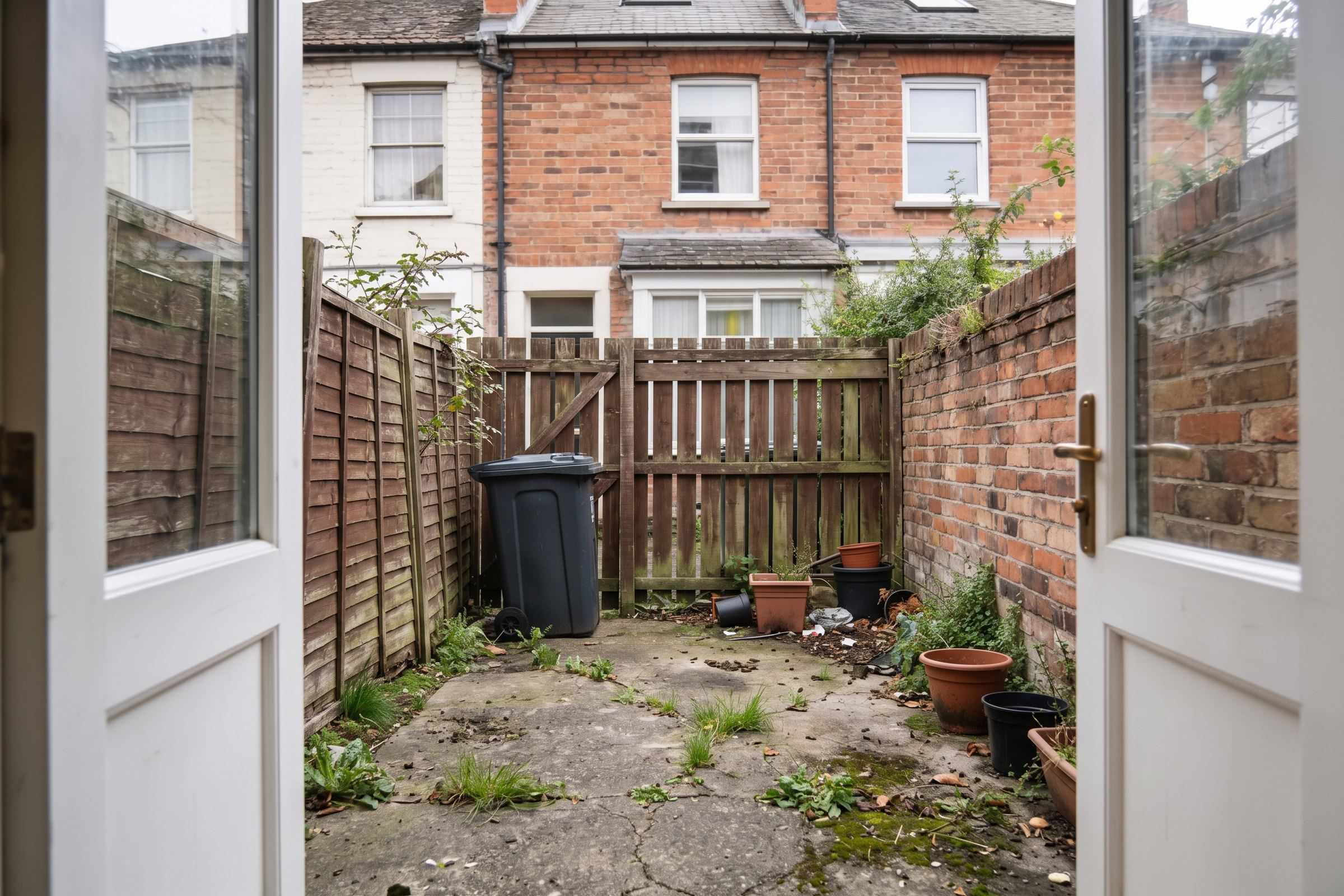
The stone is the part of a garden you can’t easily change, so it’s the part we’re fussiest about. A terrace that looks fine on the day it’s finished can sink, crack or hold water within a couple of winters if what’s underneath it is skimped.
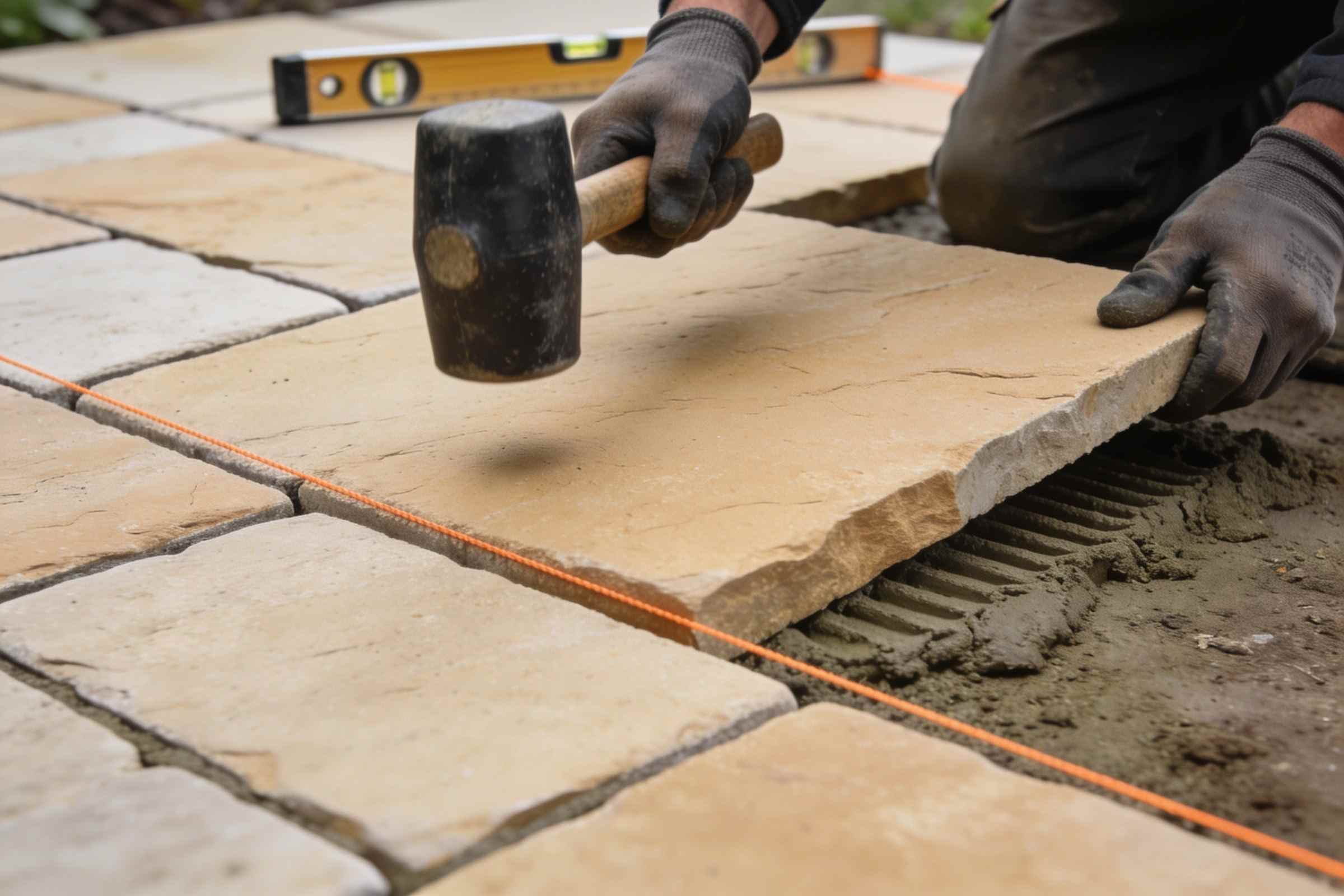
So we dig out properly, lay drainage where it’s needed and compact the sub-base in layers. Every flag goes down on a full bed of mortar (not five dabs), with a gentle fall so the rain runs away from the house. Joints are pointed by hand.
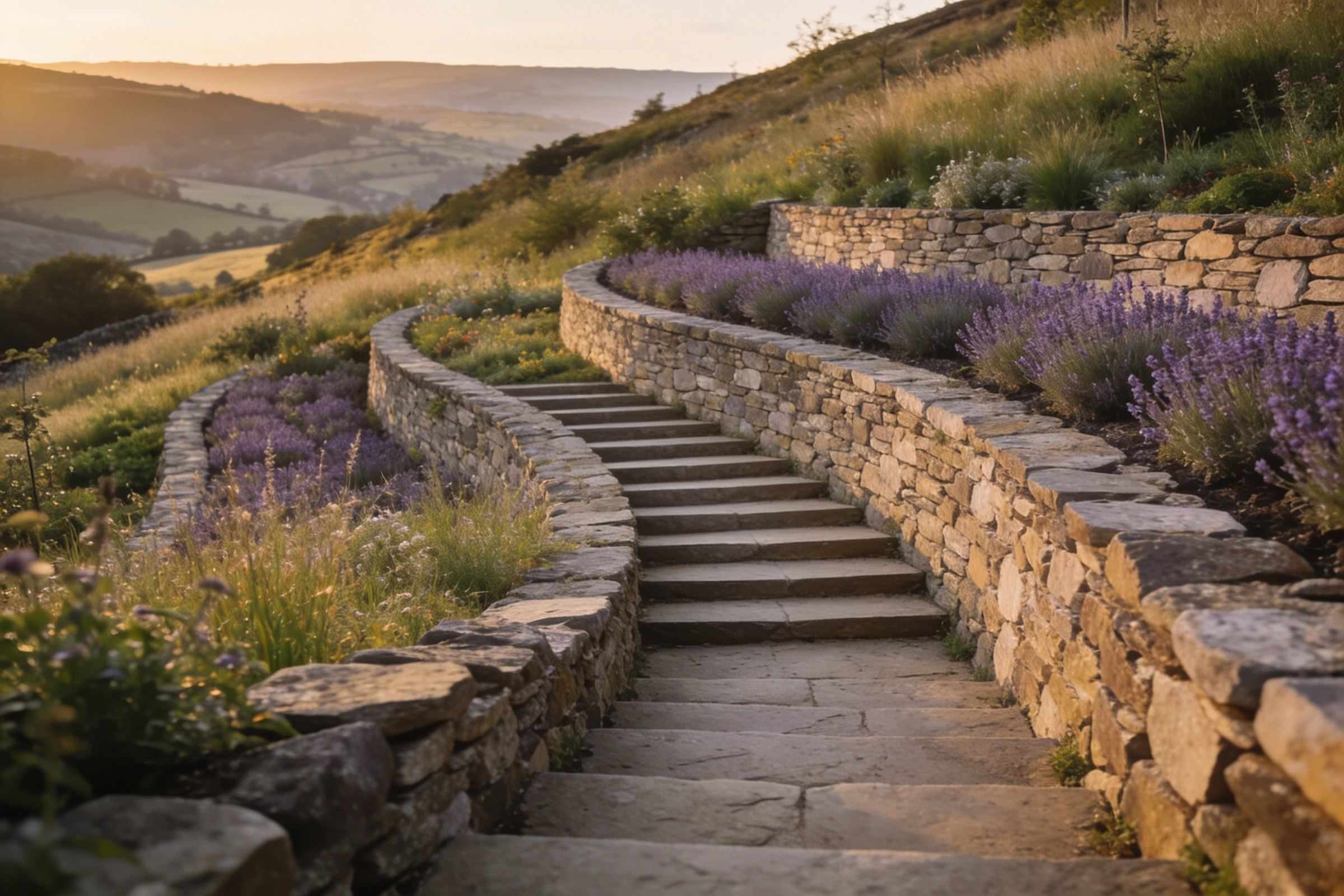
We lay sandstone, limestone, slate, granite setts, reclaimed brick and porcelain, and build steps, walls and raised beds in stone or oak.
How it goes
Set out
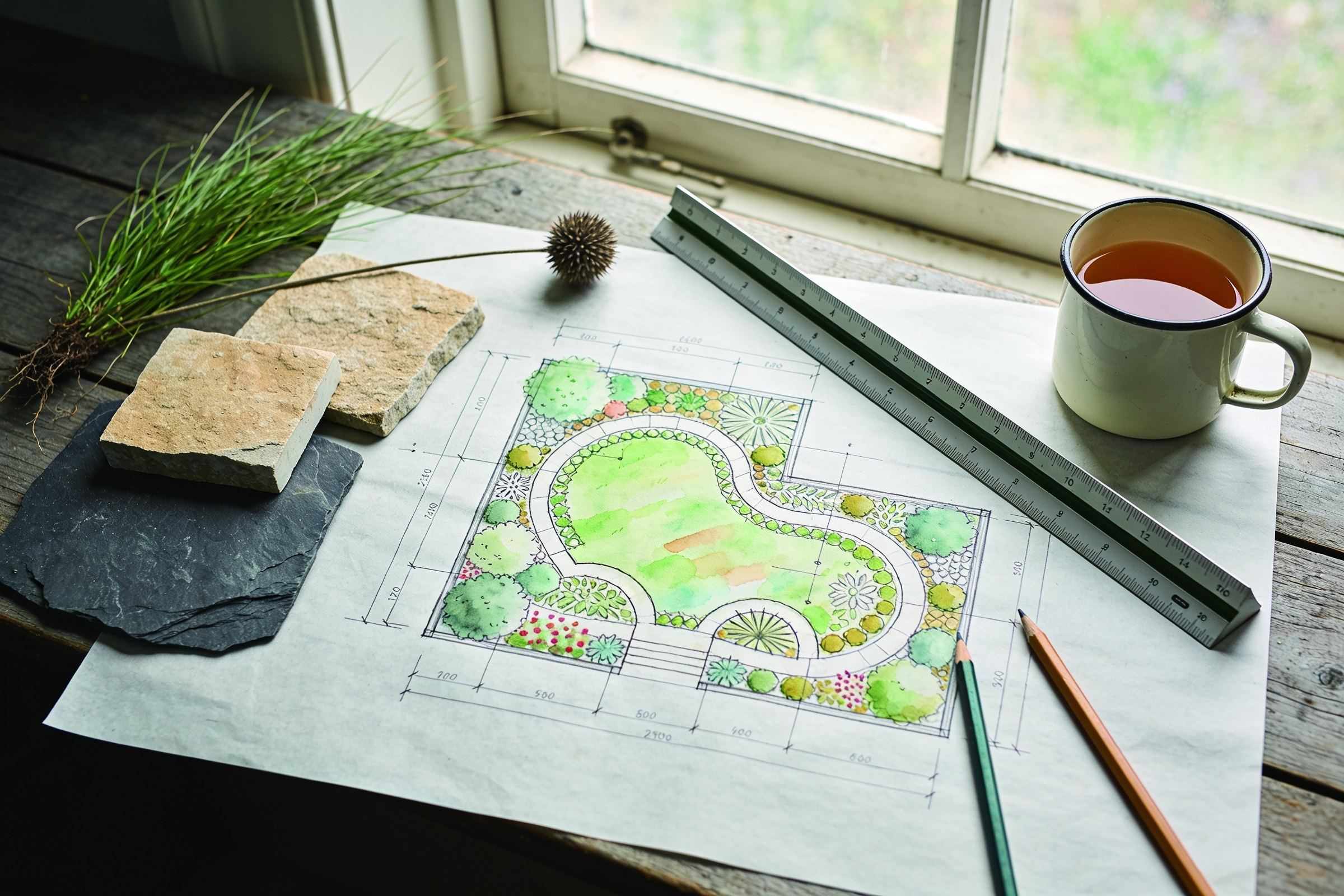
Pegs and string on site so you can stand where the terrace will be before anything is dug.
Dig and drain
We dig out to depth, lay the drainage and compact a sub-base in layers.
Lay
Every flag on a full bed of mortar, checked for fall so the rain runs away from the house.
Point and finish
Joints pointed, the stone cleaned and, if you like, sealed.